Medalla de oro de la Sociedad Española de Neumologia y Cirugía Torácica (SEPAR)
En su congreso anual celebrado en Pamplona, la Sociedad Española de Neumologia y Cirugía Torácica (SEPAR) ha concedido la medalla de oro de la sociedad

En su congreso anual celebrado en Pamplona, la Sociedad Española de Neumologia y Cirugía Torácica (SEPAR) ha concedido la medalla de oro de la sociedad

The presence of CBI by any PPM, and one or more PA isolation, were independently associated with FEV1 decline in patients with COPD.

Clinical trials evaluating the management of acute exacerbations of COPD assess heterogeneous outcomes, often omitting those that are clinically relevant or more important to patients. (…)

«Chronic airway diseases such as asthma and chronic obstructive pulmonary disease are prevalent and complex conditions that often coexist in the same patient. To address this complexity in clinical practice, and to move forward toward personalized and precision…»

Un año después de su presentación en sociedad, el programa ANTES está en pleno desarrollo. En línea con sus objetivos iniciales, muy recientemente se ha publicado un artículo especial enfatizando la importancia de realizar ensayos clínicos de intervención en pacientes jóvenes con EPOC o pre-EPOC19. .
Rosa Faner miembro del consejo científico asesor de la Cátedra de Salud Respiratoria de la UB, ha obtenido una Consolidator Grant del European Research Council para desarrollar el proyecto PredictCOPD

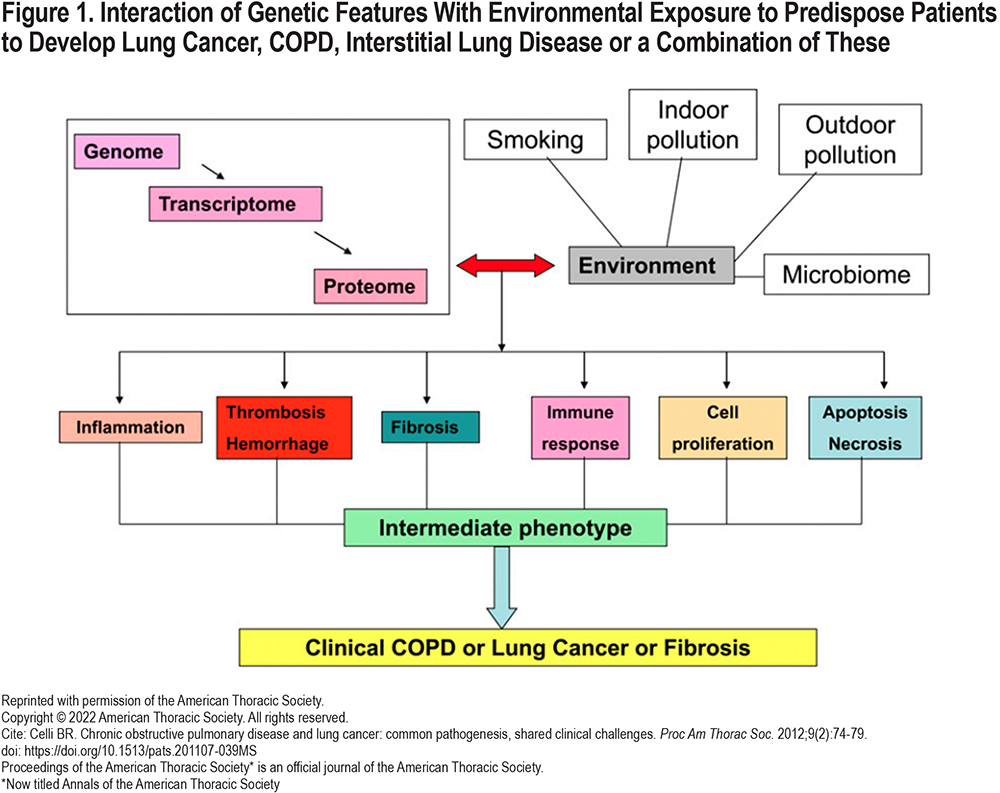
Chronic obstructive pulmonary disease (COPD) is the end result of a series of dynamic and cumulative gene-environment interactions over a lifetime…

An electronic nose can identify hospitalized ECOPD patients at risk of early readmission after discharge.

The addition of inhaled budesonide to usual care is safe and may reduce the risk of disease progression in patients hospitalised because of COVID-19 pneumonia

Recent guidelines consider chronic cough to be a unique clinical entity with different phenotypes. We aimed to investigate them in a general population and to describe prevalence, distribution, and characteristics of these phenotypes within the Austrian general population.