Systemic Immune Dysregulation in Patients With Bronchiectasis and Chronic Pseudomonas aeruginosa Infection
Systemic immune dysregulation in bronchiectasis patients
Background: immune involvement in bronchiectasis with chronic infection
Bronchiectasis is a chronic respiratory disease characterized by abnormal airway dilation, excessive mucus production, and recurrent respiratory infections.
Although the pathogenesis of bronchiectasis is not fully understood, an abnormal pulmonary immunity and chronic bronchial infection, particularly with Pseudomonas aeruginosa, are central in its pathophysiology and natural history.
Both the pulmonary immunity and the bronchial infection are associated to worse quality of life, exacerbations and mortality.
In addition, other studies have suggested that alterations in patterns of systemic inflammation have also been related to worse clinical outcomes.
Peripheral immune alterations and inflammatory imbalance
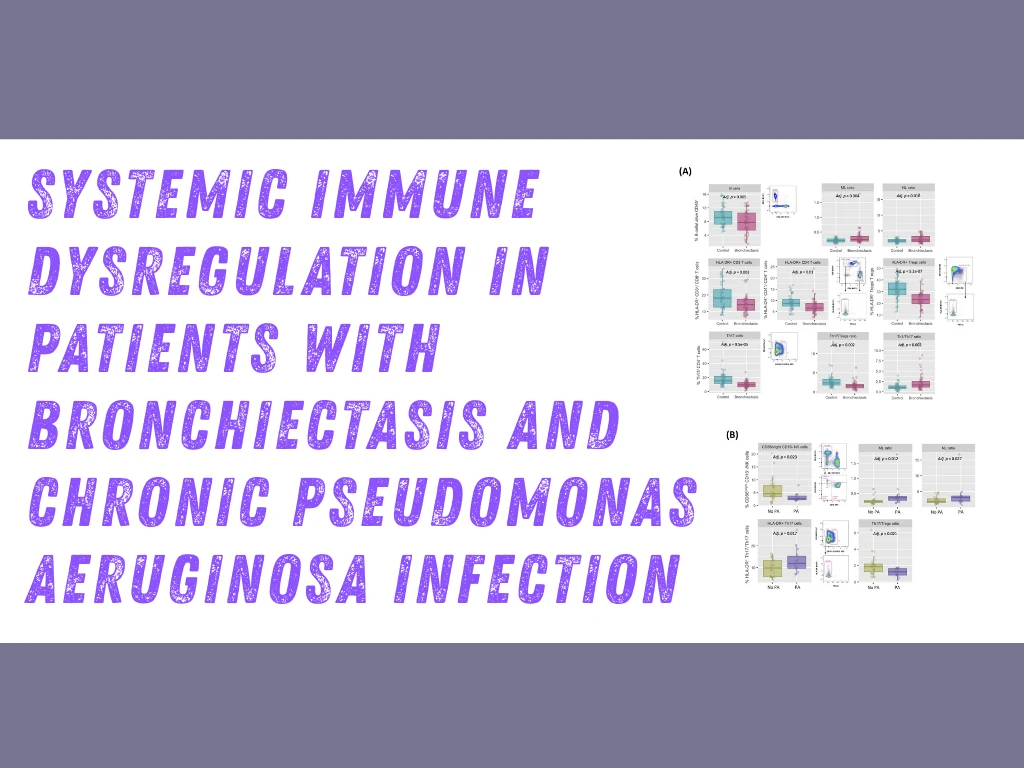
Our analysis shows that bronchiectasis is associated with alterations in peripheral immune cells, especially in those patients with chronic airway infection by P. aeruginosa.
These findings highlight the importance of T1h7/Tregs ratio against lung infections.
Interpretation and immunological implications
These findings may suggest two possible scenarios:
- The first one being that a reduction in Th17 cells and the corresponding relative increase in Tregs can represent a shift in the immune environment towards a more tolerant state.
- Alternatively, another plausible explanation might not consider the reduction of these peripheral immune cells as a sign of immune depletion, but a consequence of enhanced migration to the inflamed tissue.
Finally, the baseline immune profile associated with chronic bronchial infection remained stable after 12 months.
Conclusion: persistent immune dysregulation and clinical relevance
In conclusion, we demonstrated that patients with bronchiectasis have an altered systemic immune profile towards a less active or tolerant phenotype, especially those with chronic bronchial infection by P. aeruginosa, and that it persists over time.
Authors
Solarat B, Mendoza N, Perea L, Amaro R, Soler N, Marrades P, Palomeque A, Villanueva M, Vergara A, Marco F, Suarez-Cuartin G, Agustí A, Aliberti S, Shoemark A, Chalmers JD, Faner R, Sibila O.
Read more details at
Fecha de publicación
Available online 5 November 2025
Categorías asociadas al artículo
Noticias relacionadas

Symptoms, risk of future exacerbations, and response to long-term macrolide treatment in bronchiectasis: an observational study
Observational study shows bronchiectasis symptoms independently predict exacerbations and identify patients who benefit from macrolide therapy, even with few prior episodes.

A Bispecific Monoclonal Antibody Targeting Psl and PcrV for Chronic Pseudomonas Aeruginosa Infection in Patients With Bronchiectasis: Results From a Randomized, Double-Blind Placebo-Controlled Trial (GREAT-2)
The GREAT-2 trial shows that gremubamab significantly reduces Pseudomonas aeruginosa load and enhances quality of life in bronchiectasis patients. Discover the results now.

Treatable Traits. Why, What, How?
Discover how the Treatable Traits approach transforms the management of asthma, bronchiectasis, and COPD through personalized precision medicine strategies.
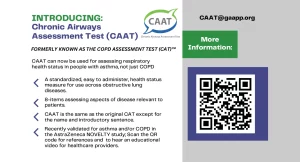
Chronic Airways Assessment Test (CAAT)
The CAAT is a standardized 8-item questionnaire to assess health status in people with asthma, COPD, and other airway diseases. Now validated beyond COPD.

Sputum metagenomics in bronchiectasis reveals pan-European variation: an EMBARC-BRIDGE study
Sputum metagenomics reveals pan-European variation in microbial and resistome profiles in bronchiectasis: an EMBARC-BRIDGE study.

I Curso de Actualización en bronquiectasias. Completo
Expertos se reúnen en el Hospital Clínic para abordar el diagnóstico y tratamiento de las bronquiectasias en una jornada de formación multidisciplinar.
Imagen desarrollada con imagen del artículo y Canva