


Using AI for COPD Diagnosis, Equity, Guideline Gaps: Alvar Agusti, MD, PhD
AI in COPD diagnosis can support case finding, spirometry interpretation and equity while GOLD 2026 highlights validation and guideline gaps.
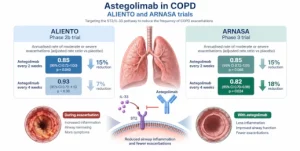
Safety and efficacy of astegolimab for COPD with frequent exacerbations regardless of baseline blood eosinophil counts (ALIENTO and ARNASA): randomised, double-blind, placebo-controlled, phase 2b and 3 trials
Astegolimab for COPD was evaluated in the ALIENTO and ARNASA trials to assess its efficacy and safety in patients with frequent exacerbations.

Maternal smoking and CC-16: implications for lung development and COPD across the lifespan
Maternal smoking and CC16 are linked to impaired lung development, lung function decline and emphysema progression, increasing lifelong COPD risk.
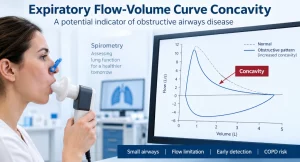
Concavity of the maximal expiratory flow–volume curve, and incidence of COPD and respiratory symptoms: a population-based cohort study
Expiratory flow-volume curve concavity predicts future respiratory symptoms but shows lower discriminatory accuracy for COPD incidence than FEV1/FVC.
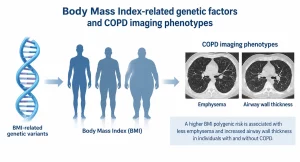
Body Mass Index-related genetic factors and COPD imaging phenotypes
BMI genetic factors and COPD are associated with decreased emphysema and increased airway wall thickness across quantitative and visual imaging phenotypes
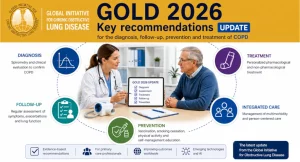
Key recommendations for primary care from the 2026 GOLD update
2026 GOLD update: key recommendations for primary care on COPD diagnosis, assessment, prevention, treatment, exacerbations and emerging technologies.