
cfDNA profiling in COPD
Introduction:
Background of cfDNA Profiling in COPD
Chronic obstructive pulmonary disease (COPD) is an heterogeneous condition characterized by poorly reversible airflow obstruction with/without emphysema.
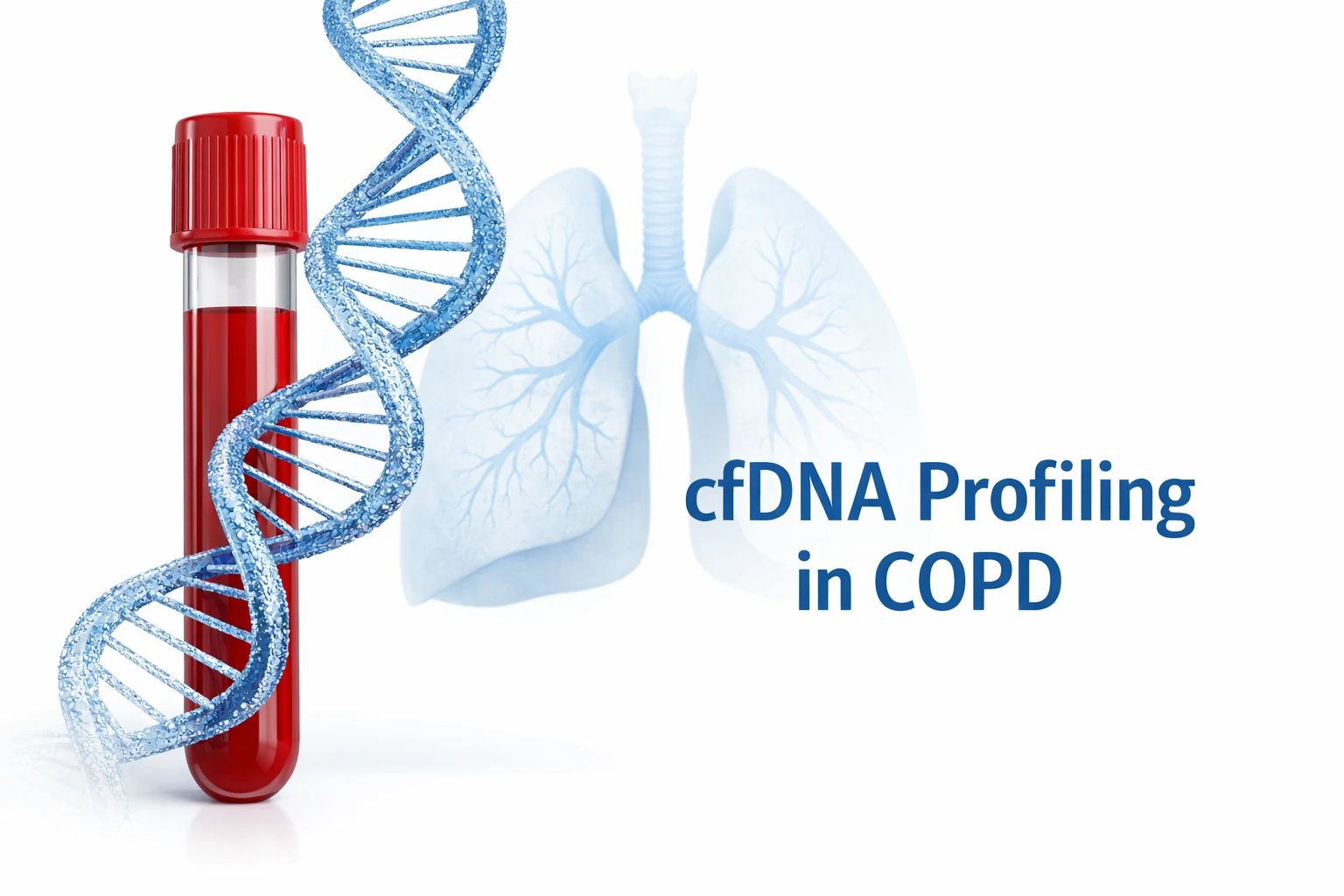
he profiling of circulating cell-free DNA (cfDNA) may offer a novel, non-invasive approach for better disease understanding and molecular subtyping.
This study aims to assess the utility of cfDNA in profiling COPD.
Methods for Whole-Genome cfDNA Analysis
Whole-genome sequencing was performed on cfDNA from n=18 healthy controls and n=29 COPD patients.
Differentially expressed cfDNAs (DEGs) between cases and controls were identified using the Wilcoxon rank sum test (p<0.05).
DEGs were then clustered, and functional enrichment analysis was conducted for each cluster. A cfDNA patient similarity network was constructed.
Key Results of cfDNA Profiling in COPD
We identified 942 DEGs between patients and controls. Clustering analysis on DEGs identified two main clusters: C#1 (n=523 genes) was increased in controls; while C#2 (n=419 genes) was increased in patients.
Functional enrichment of C#2 revealed pathways associated with oxidative damage and apoptosis.
atient networks constructed using DEGs could differentiate cases and controls, but also identified two groups of patients with different degrees of airflow limitation (p-value<0.05) and emphysema.
Conclusions on Molecular Subtyping in COPD
This study is the first to demonstrate the utility of cfDNA in COPD profiling in the heterogeneity of COPD. The clinical utility of putative biomarkers will require validation in expanded datasets.
Authors
Julieta Viglino, Alejandro Torvisco, Martijn Nawijn, Maarten Van Den Berge, Alvar Agusti, Sandra Casas, Rosa Faner
Read more details at
Fecha de publicación
Published online 18 November 2025
Categorías asociadas al artículo
Noticias relacionadas

ECLIPSE: un estudio de tres años que cambió nuestra forma de entender la EPOC
A 20 años de ECLIPSE, repasamos el estudio que transformó la comprensión de la EPOC, revelando su heterogeneidad, progresión y biomarcadores clave.
Bronchiectasis and treatable traits: the journey from concept to clinical practice
Review of the treatable traits approach in bronchiectasis, exploring phenotypes, endotypes, comorbidities, and its translation into clinical practice.
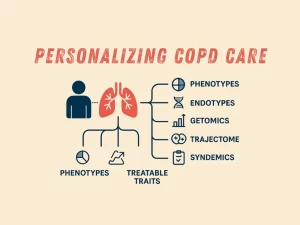
Personalizing COPD care: phenotypes, endotypes, GETomics, the the trajectome, syndemics and treatable traits
Discover how personalized COPD care integrates phenotypes, endotypes, GETomics, trajectome, syndemics, and treatable traits to improve patient outcomes.
Imagen desarrollada ChatGPT