
Video del evento: Transformando la EPOC, claves para un manejo proactivo
Conferencia sobre el manejo proactivo de la EPOC centrada en el infradiagnóstico, el control clínico y el seguimiento estructurado del paciente.
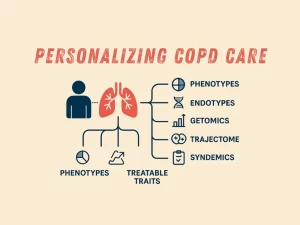
Personalizing COPD care: phenotypes, endotypes, GETomics, the the trajectome, syndemics and treatable traits
Discover how personalized COPD care integrates phenotypes, endotypes, GETomics, trajectome, syndemics, and treatable traits to improve patient outcomes.
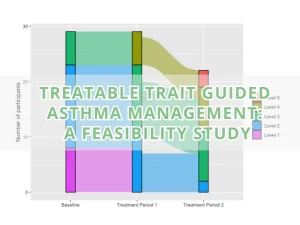
Treatable Trait Guided Asthma Management: A Feasibility Study
Protocolised treatable trait-based asthma management was acceptable to patients not under the care of a severe asthma clinic, associated with significant clinical benefit, and a full trial appears feasible.
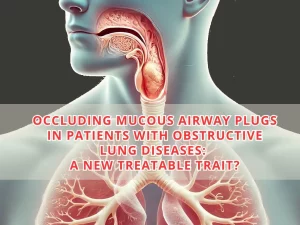
Occluding mucous airway plugs in patients with obstructive lung diseases: a new treatable trait?
Airway mucous plugging is associated with exacerbations, lung function decline, and mortality in COPD, asthma, and bronchiectasis. Identifying it as a treatable trait may improve patient outcomes through airway clearance techniques and pharmacological strategies.
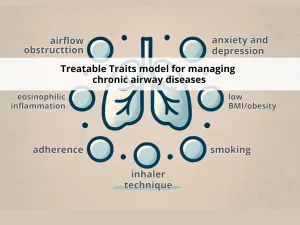
Change is in the air: key questions on the ‘Treatable Traits’ model for chronic airway diseases in primary care
Explore Treatable Traits model for chronic airway diseases like asthma and COPD in primary care. Learn about seven key traits — airflow obstruction, eosinophilic inflammation, adherence, inhaler technique, smoking, low BMI/obesity and anxiety and depression — that guide personalized care.
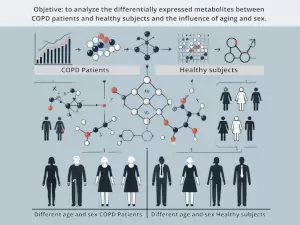
Aging and Metabolic Changes in COPD Patients
Explore the metabolic changes in COPD patients, highlighting the influence of aging and sex, with pronounced effects in males. Discover how COPD affects protein metabolism and energy production, emphasizing early aging’s impact.