
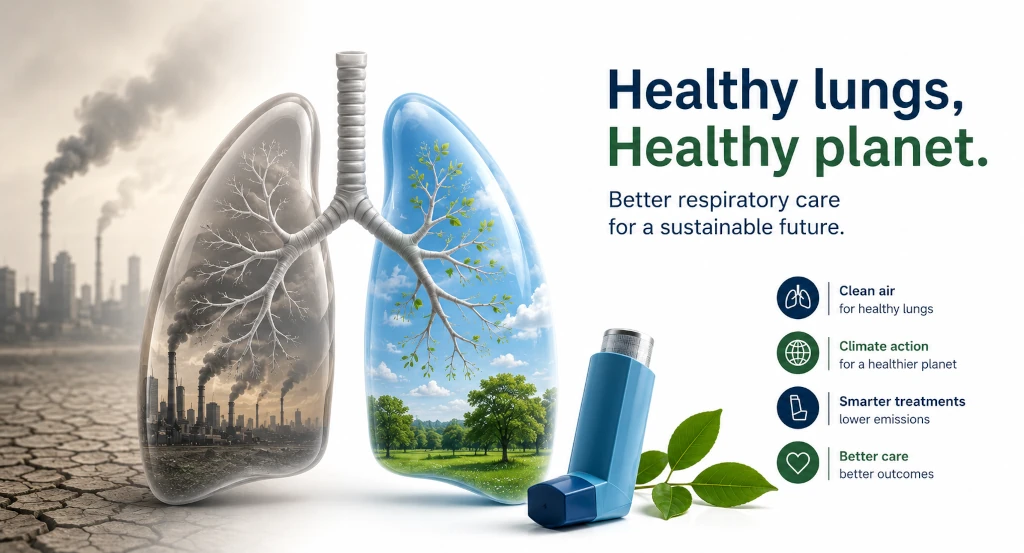
Climate change and respiratory health: implications for respiratory clinicians in primary and specialist care
Climate Change and Respiratory Health
How Climate Change Is Affecting Asthma and COPD
For millions of people living with asthma or chronic obstructive pulmonary disease (COPD), simply taking a breath can already be a daily challenge. This article explains how our changing climate is making that challenge harder.
The authors describe how rising temperatures, humidity swings, and severe storms strain the lungs of people with asthma and COPD. Hot days and heatwaves are linked to more breathing attacks, emergency visits, and deaths. Heat and humidity can cause airways to tighten in asthma, while cold, damp air can worsen COPD.
Pollen, Mould, and Air Pollution Risks
Warmer conditions and changing rainfall patterns are lengthening pollen seasons and increasing the amount of pollen in the air. Floods and damp conditions encourage mould to grow indoors and outdoors, aggravating symptoms in children with asthma and in people with COPD who are sensitive to fungi.
Thunderstorms can suddenly break up pollen grains and spores, creating bursts of tiny allergenic particles that trigger “thunderstorm asthma” outbreaks.
Respiratory Care During Extreme Weather
People with chronic lung disease are advised to stay hydrated during heatwaves and keep their homes at a safe minimum temperature in winter. Weather and health forecasts can help warn patients about high-risk periods for flare-ups.
Doctors are encouraged to give patients clear action plans that include what to do during extreme weather or poor air quality days.
Inhalers and Climate Impact
Inhalers, especially pressurized metered-dose inhalers that use certain propellant gases, contribute to greenhouse emissions. One proposed solution has been to switch patients to dry-powder inhalers, which generally have lower emissions at the point of use.
But the authors explain that this choice is not simple. Some patients depend on pressurized devices to breathe properly. A safer path is to personalize device choice and support the development of low-impact propellants.
Why Good Disease Control Matters
Poorly controlled asthma or COPD produces a much larger carbon footprint than well-controlled disease. Frequent flare-ups, emergency room visits, and hospital stays require energy-intensive care.
The authors argue that the greenest strategy is accurate diagnosis, evidence-based treatment plans, correct inhaler technique, and strong adherence.
In closing, the article stresses that climate change and respiratory health are now tightly linked, but patients should not be made to feel guilty for needing treatment
Based on
Agusti, A., Kirk, A., Panigone, S. et al.
Read more details at
Fecha de publicación
February 21, 2026
Categorías asociadas al artículo
Noticias relacionadas

Addressing the Global Challenges of COPD and Asthma: A Shared Vision From the Global Initiative for Chronic Obstructive Pulmonary Disease (GOLD) and the Global Initiative for Asthma (GINA)
Analysis of the global challenges of COPD and asthma and the shared vision of GOLD and GINA to improve diagnosis, access to inhaled therapies and patient outcomes worldwide.
Climate change and respiratory health: implications for respiratory clinicians in primary and specialist care
Review on climate change and respiratory health, focusing on chronic respiratory diseases and implications for primary and specialist care.
Climate Change & COPD: A GOLD Science Committee Review
Climate change and COPD are linked through extreme temperature, wildfire smoke, dust storms and allergen exposure, which pose major health threats.
Imagen desarrollada ChatGPT