
Climate Change and COPD: A GOLD Science Committee Review
Climate change and COPD: a growing global health threat
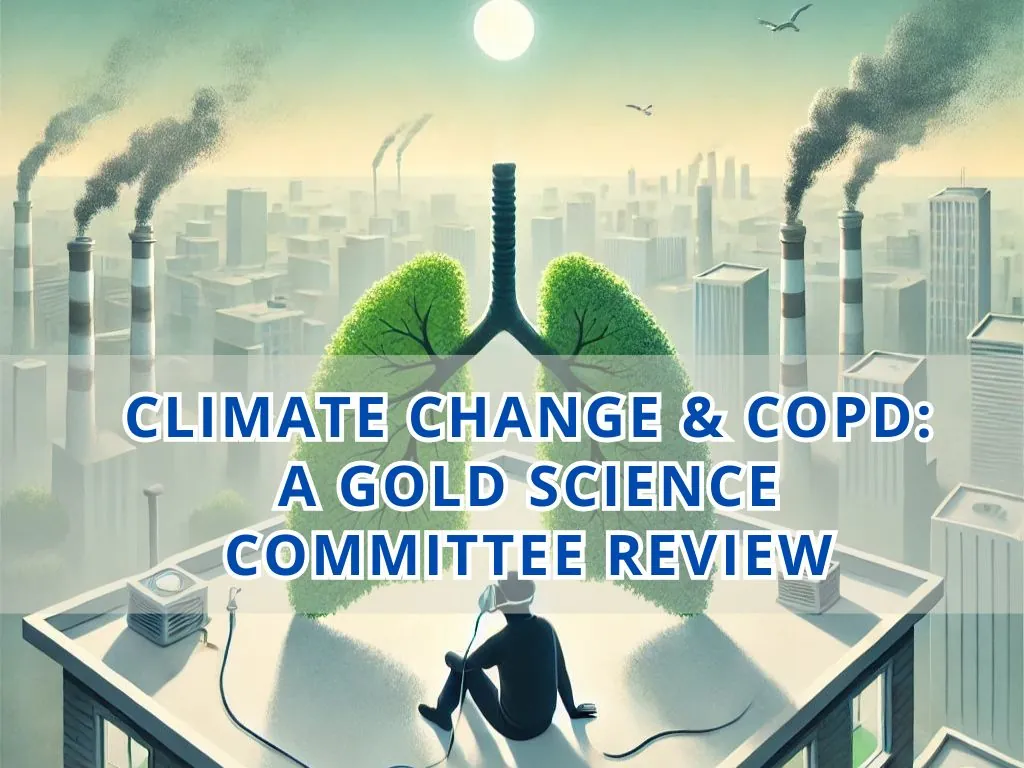
Climate change and COPD are closely linked, as climate change has increased the frequency, intensity and geographic distribution of extreme weather events such as heatwaves, severe winter conditions, floods, droughts, hurricanes, thunderstorms, wildfires and dust storms.
The adverse impacts are unequally distributed across countries and global regions, and the scale of recent changes in the climate are unprecedented. This can also be seen in the fact that the effects of climate change widen existing health and social inequities, with the most vulnerable likely to experience the greatest hazards.
In parallel, each successive decade since the 1990s has been warmer than all previous decades.
As a consequence of these rising temperatures, excess deaths in the general population have been reported during heatwaves in all regions of the world and during periods of cold weather. Notably, studies generally show that effect of high temperatures on mortality is immediate, whereas the effect of cold usually lags by 7-14 days.
Climate change is also linked to worsening of air pollution
Increased temperatures, rainfall and atmospheric CO2 concentrations have also led to longer and more intense pollen seasons. There have been increases exposure to indoor and outdoor fungal allergens as a result of higher temperatures and humidity.
Climate change has led to longer wildfire seasons, increased frequency of large wildfires, and increased area of forest burned. Exposure to wildfire smoke is associated with increased mortality in the general population and respiratory morbidity.
Air pollution and allergens: climate change worsens respiratory risks
In some regions, dust storms are becoming more frequent as a result of global warming. This is particularly concerning because exposure to dust can cause respiratory symptoms, and dust can be a carrier of pathogenic microorganisms, allergens, and fungi spores. Taken together, extreme temperature, wildfire smoke, dust storms and allergen exposure currently pose the biggest threats to people with COPD.
COPD management and its contribution to climate change
Aspects of COPD management may also contribute to climate change. In this context, the environmental impact of our healthcare facilities should not be underestimated.
However, medications that help keep patients out of hospital and prevent exacerbations can contribute to limiting environmental impact.
Authors
David M.G. Halpin, John Balmes, MeiLan K. Han, Alberto Papi, Fernando J. Martinez, Maria Montes de Oca, Obianuju B Ozoh, Sundeep Salvi, Don D. Sin, Jinping Zheng, Alvar Agusti, and Claus Vogelmeier
Read more details at
Fecha de publicación
Accepted: March 10, 2025
Categorías asociadas al artículo
Noticias relacionadas

2026 GOLD International COPD Conference
2026 GOLD International COPD Conference, November 5–6 in Philadelphia. Discover Session 4 on the diagnosis, assessment and management of COPD.

Conferencia Magistral Manuel Tapia 2018. Dr. Àlvar Agustí García-Navarro
En este artículo, les presentamos la Conferencia Magistral Manuel Tapia 2018. Dr. Àlvar Agustí García-Navarro. Celebrada en el 51 Congreso Nacional de la Sociedad Española de Neumología y Cirugía Torácica (SEPAR), en Palma de Mallorca, del 31 de mayo al 3 de junio de 2018.

Joint statement from GOLD/GLI regarding the use of spirometry to define airflow obstruction and diagnose COPD
GOLD and GLI provide a joint position on spirometry for diagnosing COPD, supporting the fixed FEV1/FVC ratio in the appropriate clinical context.
Imagen desarrollada DALL·E y Canva