
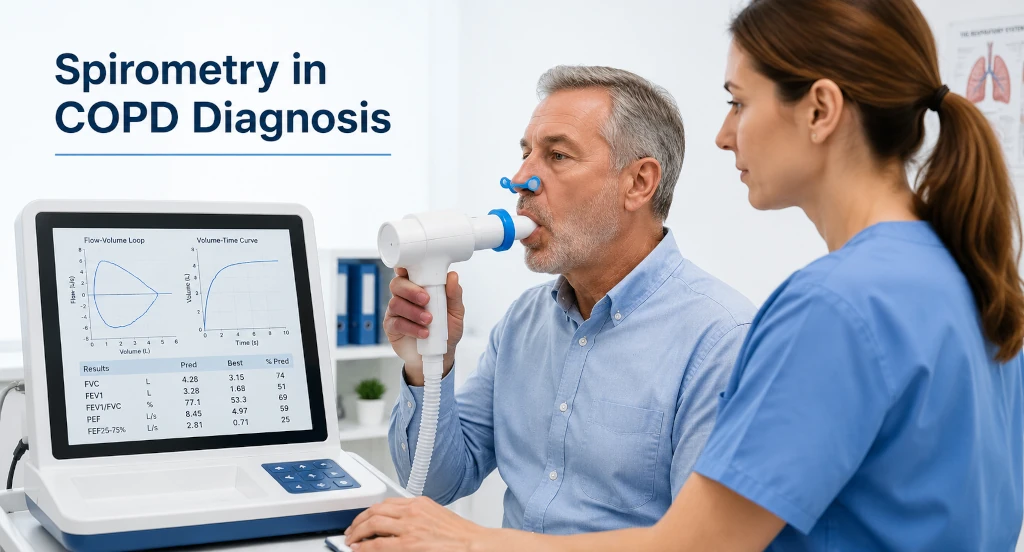
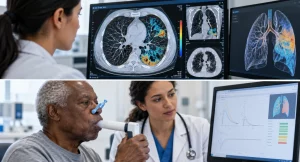
Using AI for COPD Diagnosis, Equity, Guideline Gaps: Alvar Agusti, MD, PhD
AI in COPD diagnosis can support case finding, spirometry interpretation and equity while GOLD 2026 highlights validation and guideline gaps.
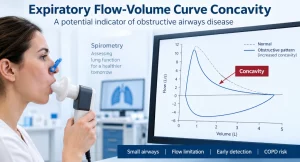
Concavity of the maximal expiratory flow–volume curve, and incidence of COPD and respiratory symptoms: a population-based cohort study
Expiratory flow-volume curve concavity predicts future respiratory symptoms but shows lower discriminatory accuracy for COPD incidence than FEV1/FVC.
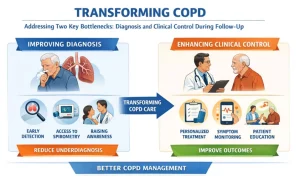
Transforming COPD by Addressing Two Key Bottlenecks: Diagnosis and Clinical Control During Follow-up
Learn why earlier COPD diagnosis and better clinical control during follow-up are essential to reduce exacerbations, improve quality of life and optimise patient outcomes.

The EXACERBANTES Study (Exacerbation of Chronic Obstructive Pulmonary Disease According to the ANTES Proposal): Rationale, Goals and Design
The EXACERBANTES Study explores treatable traits in COPD exacerbations, aiming to improve risk assessment and support personalized clinical management.
COPD Management in Primary Care: Underutilisation of Nursing Consultations
Analysis of COPD management in primary care highlighting the role and underutilisation of nursing consultations and healthcare utilisation patterns in real-world patients.
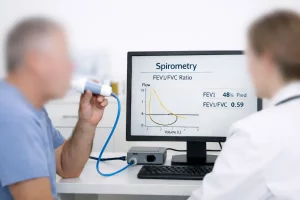
Joint statement from GOLD/GLI regarding the use of spirometry to define airflow obstruction and diagnose COPD
Joint GOLD/GLI statement on spirometry to define airflow obstruction and confirm COPD diagnosis, aiming to harmonize criteria and improve global practice.