
The EXACERBANTES Study (Exacerbation of Chronic Obstructive Pulmonary Disease According to the ANTES Proposal): Rationale, Goals and Design
EXACERBANTES Study: Treatable Traits in COPD Exacerbations
The Rationale Behind the EXACERBANTES Study
COPD exacerbations (ECOPD) are complex events that demand a personalized approach. A novel patient-centered approach focuses on the identification of treatable traits (TTs) has recently been proposed.
Objectives of the EXACERBANTES Study
The primary goal of the EXACERBANTES study is to systematically describe the distribution of TTs in patients with ECOPD attending primary care (PC) and hospital-based emergency care (HC).
Clinical Outcomes and Risk Prediction
Secondary goals include: (1) assessing the relationship between individual TTs and relevant clinical outcomes; (2) developing a predictive risk score based on TTs; (3) comparing the performance of different severity classifications; (4) validating these scores against the DECAF (Dyspnea, Eosinopenia, Consolidation, Acidosis, Atrial Fibrillation) index in hospitalized patients; (5) evaluating the feasibility of measuring FEV1 during exacerbations using handheld microspirometers; and (6) comparing lung function during the acute phase with measurements taken 90 days later.
Study Design and Patient Assessment
Prospective, multicenter, observational study involving patients diagnosed with ECOPD in PC and HC. The PC cohort will undergo routine and advanced testing including ECG, microspirometry, and capillary C-reactive protein (CRP). The HC cohort will undergo additional assessments such as blood tests, arterial blood gases, chest-X-test, and biomarkers (CRP, troponin T, NT-proBNP, D-dimer). Patients will be re-evaluated 90 days after the index event.
The estimated sample size for the primary objective is 397 patients.
The first patient was recruited on December 13, 2024; results are expected in the first quarter of 2026.
Clinical Implications of the EXACERBANTES Study
The EXACERBANTES study offers a framework to explore TTs in ECOPD and to develop a personalized, outcome-oriented treatment strategy.
Authors
Juan José Soler-Cataluña, Alberto Fernández-Villar, José Luis Izquierdo, Juan Luis García-Rivero, Borja G. Cosio, José Luis López-Campos, Marc Miravitlles, Alvar Agustí, on behalf of the EXACERBANTES study group
Read more details at
Fecha de publicación
July – September 2026
Categorías asociadas al artículo
Noticias relacionadas

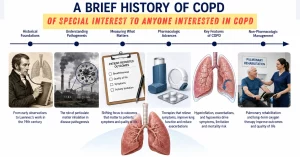
A Brief History of COPD: As Told by Some of Its Senior Scientists and Clinicians
Explore the history of COPD and the evolution of disease concepts, treatment strategies, patient outcomes, pulmonary rehabilitation and clinical management.
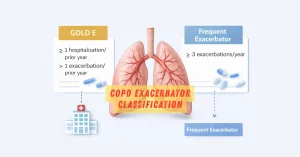
“GOLD E” VERSUS “FREQUENT EXACERBATOR” CLASSIFICATIONS IN COPD: A PROTEO-METABOLOMIC PERSPECTIVE [COMUNICACIÓN PREMIADA]
Comparison of COPD exacerbator classification systems (GOLD E vs Frequent Exacerbator) using proteomics and metabolomics to identify biological differences and biomarkers.
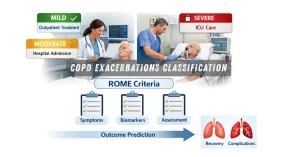
The ROME COPD exacerbation proposal works! Time to move forward
The ROME proposal for COPD exacerbations classification offers a new approach to assess severity and predict outcomes, improving clinical decision-making

Video del evento: Transformando la EPOC, claves para un manejo proactivo
Conferencia sobre el manejo proactivo de la EPOC centrada en el infradiagnóstico, el control clínico y el seguimiento estructurado del paciente.

ECLIPSE: un estudio de tres años que cambió nuestra forma de entender la EPOC
A 20 años de ECLIPSE, repasamos el estudio que transformó la comprensión de la EPOC, revelando su heterogeneidad, progresión y biomarcadores clave.

Patients with COPD prioritise chronic symptoms and functional impact as key outcomes in exacerbation trials
Patients with COPD prioritise chronic symptoms and functional impact as key outcomes in COPD exacerbation treatment trials.
Imagen de presentación de Estudio EXACERBANTES