
Treatable Traits. Why, What, How?
Discover how the Treatable Traits approach transforms the management of asthma, bronchiectasis, and COPD through personalized precision medicine strategies.

Discover how the Treatable Traits approach transforms the management of asthma, bronchiectasis, and COPD through personalized precision medicine strategies.

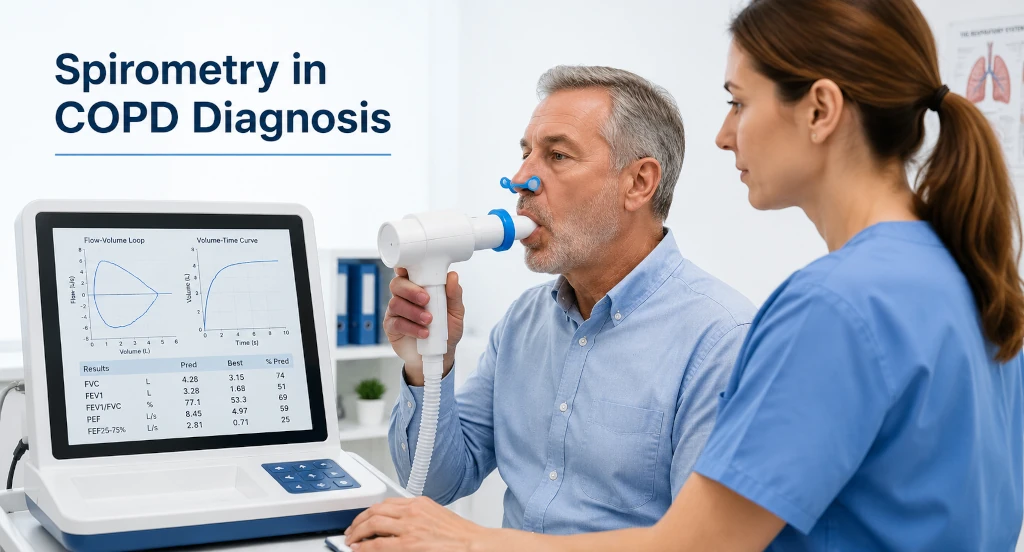
Study identifies 10-metabolite panel distinguishing COPD from healthy subjects with ~90% accuracy, highlighting lipid metabolism dysregulation and offering new diagnostic insights.

Study highlights the role of cellular senescence markers (p16, p21) and MMP-7 co-expression in fibrosing interstitial lung diseases.

Discover the latest advances now pipeline new COPD treatments pipeline, from monoclonal antibodies to emerging therapies, and future opportunities in clinical development.

Research on idiopathic pulmonary fibrosis reveals how immune infiltrate differences in early stages influence disease progression. Study highlights the role of B cells, T cells, and NK cells as potential biomarkers.

Expert consensus on patient-centred strategies to manage multimorbidity in COPD, aiming to improve outcomes and reduce disease burden.

The CAAT is a standardized 8-item questionnaire to assess health status in people with asthma, COPD, and other airway diseases. Now validated beyond COPD.

Discover how ex vivo lung perfusion (EVLP) impacts the lung microbiome and its implications for improving donor lung viability and reducing transplant complications.

Sputum metagenomics reveals pan-European variation in microbial and resistome profiles in bronchiectasis: an EMBARC-BRIDGE study.

This study identifies a metabolic signature of COPD patients, involving fatty acids, amino acid and carbohydrate metabolites, using LC-MS plasma profiling.